Riding the Congo Nile Trail: A Journey of Discovery
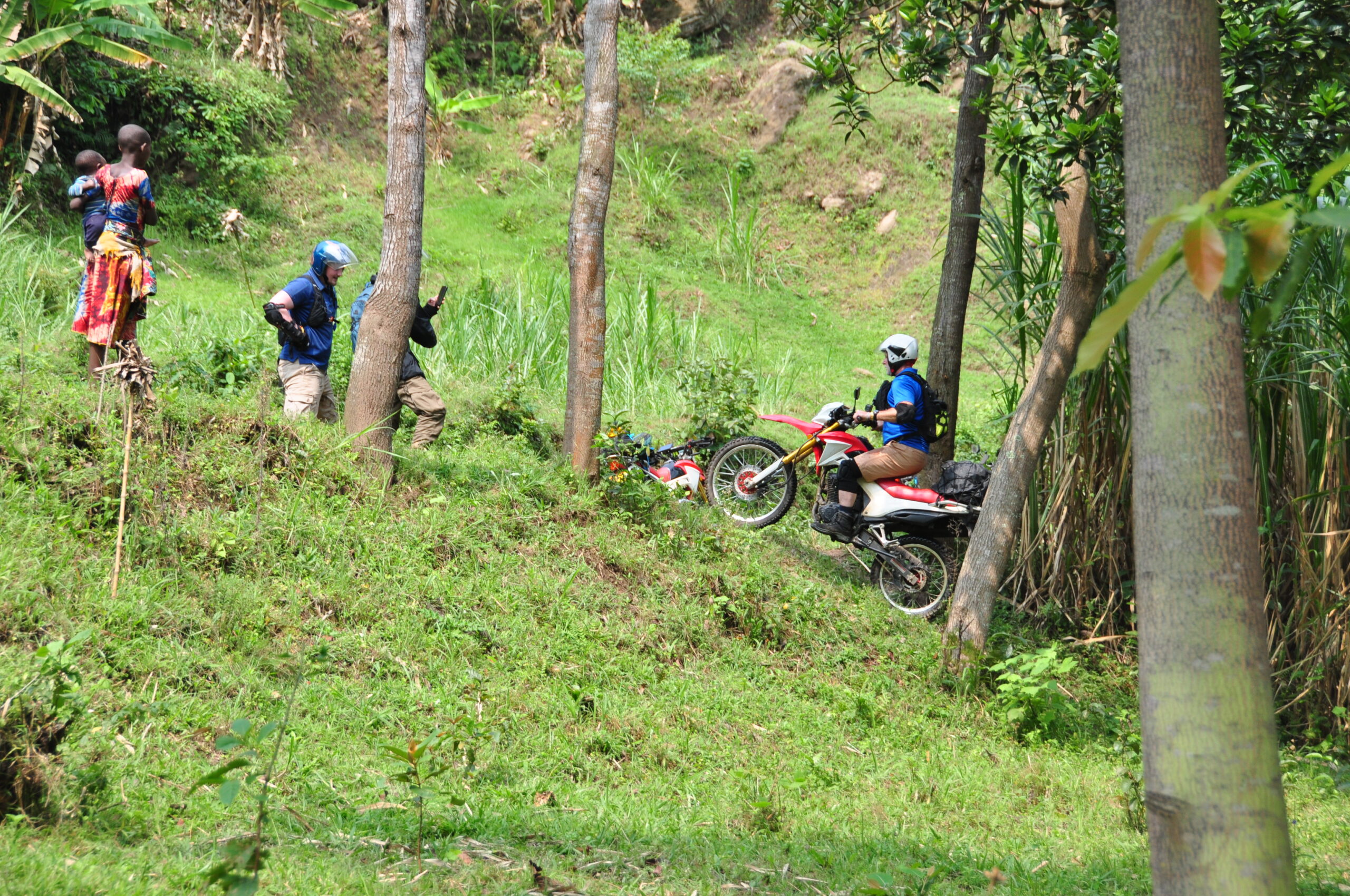
It is something of an understatement to say that Rwanda has a chequered history. Depending on their age, people either know about it because of the Genocide of 1994, or as the country where the UK government was planning to send refugees. There are also the Arsenal Football supporters who know of it from the Club’s “visit Rwanda” sponsorship emblazoned on the sleeve of their player’s kit. When I speak to people about Rwanda, very few know where it is, often not even knowing that it is in Africa. It has a tempestuous history from being a German colony before the First World War, following which it became a Belgian colony. Independence was granted in the early 60’s and then the country seemed to be in a continual on and off state of civil dispute culminating in the Genocide of 1994. Briefly, in 10 weeks from the start of April 1994, 1,000,000 people were massacred. Clearly, it scarred the country. Those scars remain and 2024 was the 30th year of remembrance and this was clear throughout the Country, with huge boards and signs everywhere encouraging everyone to remember. I first went to Rwanda many years ago as a charity worker and barring Covid have been at least once every year since. I am one of seven ordinary working people who are the Trustees of a small sports-based charity, Friends Of Rwandan Rugby (FoRR), operating in Rwanda whose raison d’etre is to help with community cohesion using rugby as the vehicle. Rugby is a ‘post genocide’ sport and therefore has no pre-genocide ethnic divisions. Rwanda is a beautiful country, known as the Land of a Thousand Hills, although there are many more than that. Our charity works all over the country and as a result I have seen a great deal of it, but only from a bus. As a charity, we maximise our time and have little opportunity to see and explore the wider countryside. It is the most densely populated country in Africa, only a little bit bigger than Wales, yet has a population of 12.5 million, compared to 3 million in Wales. The Rwandan population is youthful, the median age, just 19.7 years, so you are never very far from a friendly, enthusiastic and helpful Rwandan. Every time I have visited Rwanda on behalf of FoRR, I have promised myself a return trip to explore further. I had heard of the Congo Nile Trail and discovered that it runs the length of the Country from North to South almost following the shores of Lake Kivu. Returning home from there in September 2023, I started to put things in place for a return motorcycle expedition and together with a few friends drew up some plans. Word spread and more friends were recruited, including another Charity trustee and my son Joe. Joe, being the techie, sorted the off-road element of the route. A Rwandan friend, Claude, was employed as an in-country guide, his role being mainly as interpreter and back stop in case of emergencies. I am a Mountain and Jungle Expedition Leader, but this was my first motorcycle tour. The ideal bike for our trip was the Haojin Hawk 200cc, hired locally. It is a single cylinder trail bike with modern touches, such as electric start, single rear shock and USD forks. However it had no water-cooling and no fuel injection – a blast from the past with a carb and a choke. It proved to be nice to ride, enough performance for Rwandan roads and speed limits in built up areas of 60kmh and on open roads, 80kmh. I found it robust, reliable, economical and comfortable. The trip was timed to start at the end of one of our charity tours, so a few of the travellers were already in Rwanda. The bikes were collected and we convened at the accommodation to load them up. Everyone was advised to travel light as we had no support vehicle. I had researched the locations of hospitals and medical centres, in case of any emergencies. I also briefed everyone that Rwanda is a developing country with no Air Ambulances, no mountain rescue teams and that we had to rely mainly on ourselves. I carried emergency supplies, a stretcher and comprehensive first aid kits. We would all have had to deal with any emergency situation, so it was imperative for everyone’s enjoyment that we all rode sensibly, taking no silly risks, no riding beyond ability. If anyone felt unable to tackle an obstacle or some difficult terrain off road, we had experienced riders who would assist. On arriving with the bikes at our accommodation, we loaded up and discovered that one of them had a slow puncture, whilst I did have the means to repair it, I decided to see how quickly a replacement bike could be sorted. As it turned out, much quicker than I could repair the bike. The replacement bike was not one of the mighty Haojin Hawks but an even mightier Zongsheng Cyclone 300. This bike has an air-cooled 300cc engine and came complete with panniers, a top box and worryingly road-based tyres. It looked for all the world like an Adventure bike, sharing the ‘beak’ that is so common to the genre. Fuelled and loaded the Cyclone felt heavy compared to the mountain goat that is the Haojin Hawk. I was in a dilemma with this bike and not knowing the ability of many of the other riders, I gave my Hawk to replace the punctured bike and rode the Cyclone. In some respects, this turned out to be a wise choice as the carrying capacity of the Cyclone was greater and it had a proper pillion seat, should we have needed it. The downside was its weight and road-based tyres, but this was Rwanda, the main source of transport being the 125/150cc moto taxis on road tyres that seemingly go almost anywhere! So, when in Rome…….. Like many similar cities with a different road culture to